
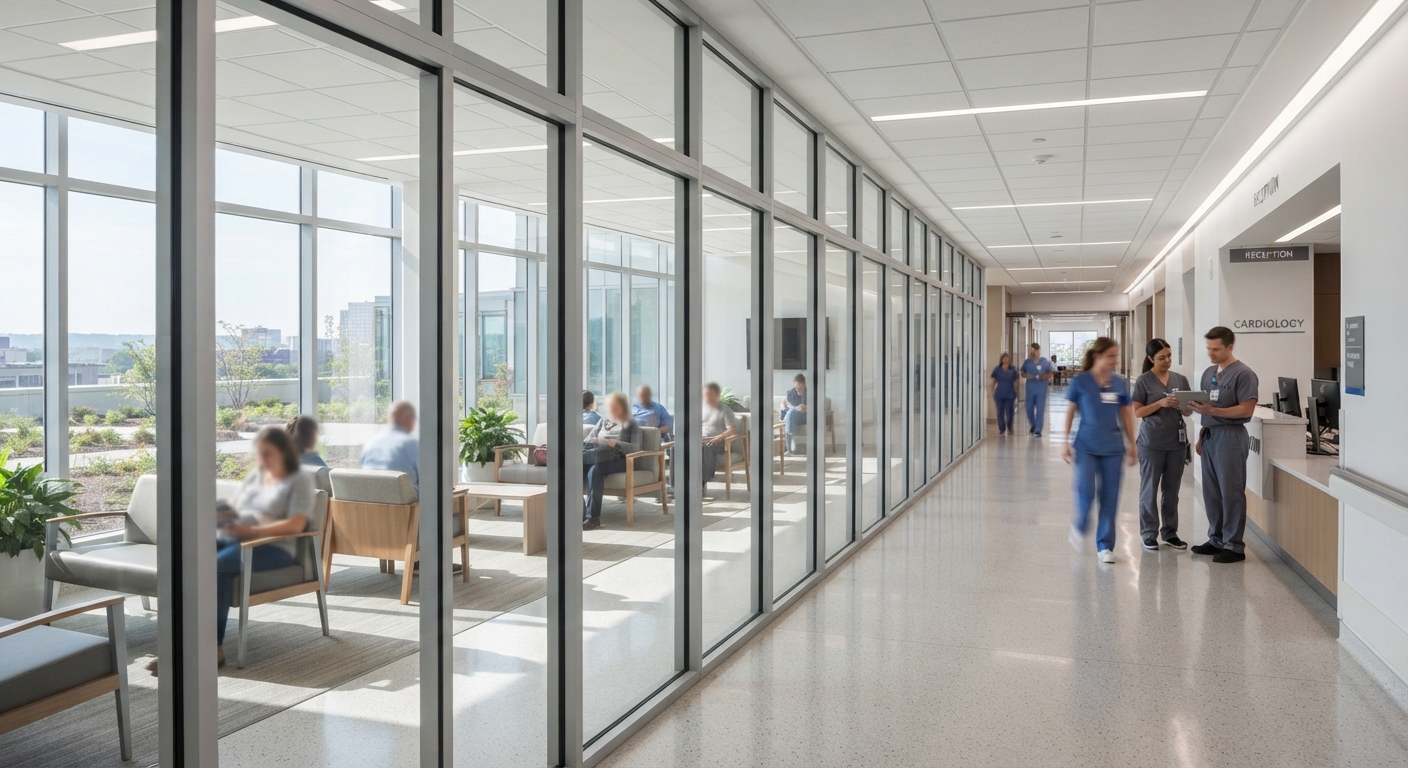
Choosing aluminium joinery for healthcare facilities stands out for its hygienic, durable and easy-to-clean surfaces that meet demanding standards. These aluminium partition systems can be installed as fixed or operable partitions, creating a functional and secure layout everywhere from examination rooms to corridors.
Every building material used in hospital architecture must meet specific standards. In areas that require continuous disinfection, such as outpatient clinics, intensive care units, operating rooms and patient rooms, aluminium profile systems offer important technical and functional advantages.
The main reasons aluminium joinery (including aluminium door and window systems) is increasingly preferred in modern hospital projects are as follows:
Antibacterial Properties and High Hygiene Standards
Minimising the risk of infection is a primary goal in hospitals. Hygienic aluminium joinery has a smooth, non-porous surface that does not allow bacteria, viruses or fungi to thrive. It is highly resistant to chemical disinfectants and intensive cleaning procedures, unlike wood or plastic (PVC), which can deteriorate over time and become a place for microorganisms to accumulate.
High Fire Resistance and Safety
Fire safety regulations require public buildings and hospitals to use materials that do not spread flames. Aluminium is classified as an A1-rated non-combustible material. In the event of a fire, it does not release toxic gases or contribute to the spread of flames, helping create safer evacuation routes.
Airtightness, Thermal Insulation and Sound Insulation
Airtightness is especially important in operating rooms and intensive care areas where positive or negative pressure must be maintained. Thermally insulated aluminium joinery systems provide a secure seal with specialised EPDM gasket structures. They also help isolate noise from outside or from corridors, supporting the quiet and peaceful environment patients need.
Fast and Modular Installation
Aluminium joinery can be installed much faster and more cleanly than traditional brick or plasterboard walls. Thanks to their modular construction, aluminium partition systems can later be dismantled, relocated or reconfigured easily when requirements change.
Maximum Durability in High-Traffic Areas
Hospitals are high-traffic environments where stretchers, wheelchairs and staff move continuously, creating significant mechanical wear. Thanks to their high strength, aluminium joinery resists impact, does not sag and retains its original form for many years. This helps healthcare organisations minimise maintenance and replacement costs.
| Feature | Aluminium Joinery | PVC Joinery | Wood Joinery |
|---|---|---|---|
| Hygiene & Bacterial Resistance | Very high (non-porous) | Moderate (may scratch over time) | Low (may absorb moisture) |
| Fire Resistance | A1-rated (non-combustible) | Low (may release toxic gases) | Low (can catch fire) |
| Impact and Heavy Traffic | Highly durable and will not deform | May flex or break | Scratches and wears |
| Service Life | At least 40–50 years | 15–20 years | Requires regular maintenance |
Where Are Hospital Aluminium Partition Systems Used?
- Operating Room Doors: Automatic aluminium doors with complete airtightness and hermetic sealing.
- Patient Room Windows: Large-glazed aluminium windows with thermal insulation and secure opening mechanisms.
- Laboratories and Intensive Care Areas: Hygienic glass partition walls with minimal profile detailing.
- Public Entrances and Corridors: Automatic sensor-operated sliding doors and draught-lobby systems.
Using aluminium joinery in hospitals and healthcare facilities provides more than a modern appearance; it also delivers long-term benefits in hygiene, durability and fire safety. With its recyclable structure, aluminium partition systems remain a reliable part of modern healthcare architecture.
Frequently Asked Questions
Why is aluminium joinery preferred in hospitals?
Because of its hygienic surface, easy cleanability, fire resistance and long service life, aluminium joinery is widely preferred in healthcare facilities.
Which hospital areas use aluminium partition systems?
They are used in outpatient clinics, operating rooms, intensive care units, laboratories and patient rooms—areas that require frequent disinfection. They are also widely used in offices as office partition systems.
Do hygienic aluminium joinery systems prevent bacterial growth?
Their smooth, non-porous surface does not provide a favourable environment for bacteria, viruses or fungi to develop, making hygienic aluminium joinery a suitable choice for healthcare buildings.
How long does aluminium joinery installation take?
Its modular construction allows faster installation than traditional wall systems; the exact timeframe depends on the project size and application area.
Bir yanıt yazın